
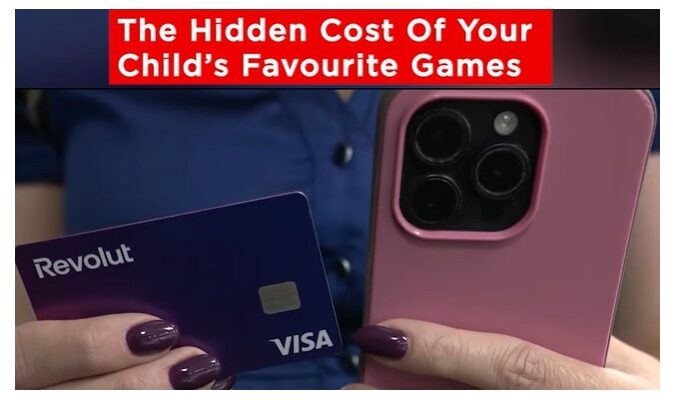
Friends, I am living an odd life. But it has led me to delving more into the world of in-game currencies and micro-transactions. I had the pleasure of being interviewed by Virgin Media’s Mairéad Cleary on the topic yesterday evening. I would like to expand on that. The European Consumer Authorities are in the midst of a large-scale investigation into 9 companies using in-game currencies in exchange for real money. Let’s slow up a little bit first though.
What are in-game currencies and micro-transactions?
The easiest way to explain what in-game currencies are to compare them to grocery store reward cards. For this example, I’m going to use Dunnes Stores. By spending money in Dunnes Stores, you collect points that convert into vouchers. These vouchers can only be used in Dunnes Stores. In-game currencies are the same. You use real money to make the purchase, and what you purchased can only be used in that specific games.
So, what’s the problem?
One of the biggest issues with micro-transactions and in-game currencies is the lack of moderation on who can buy them. Any child who has access to games with micro-transactions can make charges on parents/guardians cards. All they need is a card linked to the account. This is something many of us do automatically – set up an account on a new gaming platform and add a card, or even just saving our cards to our phones. Unfortunately, it does have a domino effect.
Many of these transactions occur because children do not always understand that they are spending real money, or may not understand the value of money. I firmly believe that financial skills should be taught in schools starting at primary school age. Although it wouldn’t solve all the issues we have with micro-transactions and in-game currencies, it would go a ways to help.
And even still, there are more issues. Battle passes. Most games that have a battle pass have both a free and paid version. The free version tends to have some basic level rewards for standard leveling up, while the paid version is more “premium”. Alongside cosmetics and emotes, some battle passes offer in-game currency for free in their premium counterparts. However, it is very rare that the amount of in-game currency earned through the pass would actually equate to the cost of a premium cosmetic in the in-game store. This is the start of a vicious cycle. Battle pass doesn’t give enough coins? Here’s a way to buy more to afford that skin you want! And of course, there is a minimum spend. As of the date of writing, the least amount of Fortnite V-Bucks you can buy is 800, costing €8.99. They are also NON-refundable.
The culture of spending
Sadly, we also live in a competition culture, for want of a better description. I’m sure many people will remember the days where social acceptance was dependent on clothes choices, or who had the newest toy. That has transferred on now to who has the best phone, gaming system, and even in game cosmetics. Albeit I’m sure there is still an element of the clothes and toys involved.
Unfortunately, it doesn’t stop there. As some of you may know, I returned to third level education as a mature student. Yesterday on break I was sat with some friends, and one asked me if I was going to buy the new Five Nights at Freddy’s skins in Fortnite. I responded saying that I don’t want to spend the money – a full skin bundle in Fortnite can run upwards of €30. And I was met with the response of “but I thought you liked Five Nights at Freddy’s?” This has led me to question is there now yet another layer of detriment to microt-ransactions. Are we now living in a world where you don’t actually like something unless you spend money on cosmetics that can only be used in a game?
Micro-transactions – all bad?
At the end of the day, micro-transactions are okay for adults. While some can make games pay-to-win (which is ridiculous in my opinion), adults can make more informed decisions. As adults, we understand the value of money, and can spend it as we wish. But the easy accessibility needs to end for children. Games where micro-transactions and buy-able in-game currencies exist need to be restricted to people over the age of 18, and verification is needed. A base education on finances is also essential in schools, not just to lower the amount of micro-transactions, but to prepare children for the real world.
Stay tuned to GamEir. Come talk with us on Twitter (@gam_eir), Facebook (@GamEir), and Instagram (@GamEir).
I promise we’re nice! Keep up with our streams over on Twitch (GamEir) and our videos on YouTube (GamEir) and we’ll give you all the latest content.